 neuralearn.com.au
What your brain
is actually doing.
If you've downloaded this guide, something in the title recognised you. Not the label. The feeling. A particular kind of mental exhaustion that doesn't come from what you accomplished today. It comes from the effort of trying to stay on track while doing it.
The people I work with who have attention difficulties are among the most driven, capable people I encounter. They are not lazy. They are not undisciplined. Many of them are working twice as hard as the people around them just to achieve the same level of function. Their brains operate differently. And "differently" is a description, not a deficiency.
Here is what the neuroscience shows, consistently: attention difficulties come with specific, measurable brainwave patterns. Patterns that can be identified with precision using qEEG brain mapping, and that can be trained to shift through neurofeedback. Not through willpower. Not through clever systems. By working at the level where the pattern actually lives.
This guide will do three things. First, it will show you what is actually happening in a brain that struggles with sustained focus. Second, it will give you a self-assessment, one version for adults and one for parents to use with their children, that tells you how significant the pattern is and what that means for the protocol ahead. Third, it will give you a complete 21-day protocol built from the same tools we use with clients between sessions.
Work through it carefully. The self-assessment matters. Your score shapes how you interpret everything that comes after it. If at the end you are curious about what your actual brain map would show, there is a link at the end for a conversation. That is all it is: a conversation.
Over the coming weeks I'll also send you a short series of emails going deeper on what's in this guide: the specific brainwave patterns behind attention difficulties, how dopamine and the brain's reward circuitry connect, and what the research shows about why standard strategies reach a ceiling. Keep an eye out for the first one.
Your Brain Pattern
Self-Assessment
Before reading the science or the protocol, take this assessment. Your score will tell you how established your attention pattern is, and how much of the work the 21-day protocol can cover on its own versus where deeper support becomes valuable.
Rate each statement honestly. There are no right answers, only accurate ones.
Adult version
Your attention system is managing well. The 21-day protocol will sharpen focus further and give you tools to maintain that capacity under demand.
This is the pattern we see most often in high-performing adults. The protocol will produce meaningful change. A brain map will show precisely which frequencies are driving the difficulty.
The pattern is well-entrenched and is likely affecting your daily output and energy more than you realise. Use the protocol, but brain mapping is strongly recommended. Compensatory effort alone has a ceiling.
For your child (ages 8–16)
If you are a parent concerned about your child's attention, answer these on their behalf using the same scale.
The protocol is a useful preventive tool. Ages 8 to 14 are a particularly responsive window for building attention regulation habits before academic demands increase.
A meaningful pattern worth taking seriously. Unaddressed, attention regulation difficulties tend to compound through adolescence as academic and social demands grow. The protocol is strongly recommended, and a brain map is a worthwhile next step.
Early brain mapping is valuable here. At this score, the pattern is affecting your child's daily experience in ways that conscious strategies alone will struggle to reach. This is the most responsive window for intervention.
What's Actually Happening
in Your Brain
Attention isn't a single thing. It is an overlapping network of brain systems: arousal, inhibition, working memory, and executive control. When any part of this network is out of balance, the whole picture suffers. The specific pattern we consistently see in attention difficulties has a name: the Theta/Beta Ratio.
The Theta/Beta Ratio explained
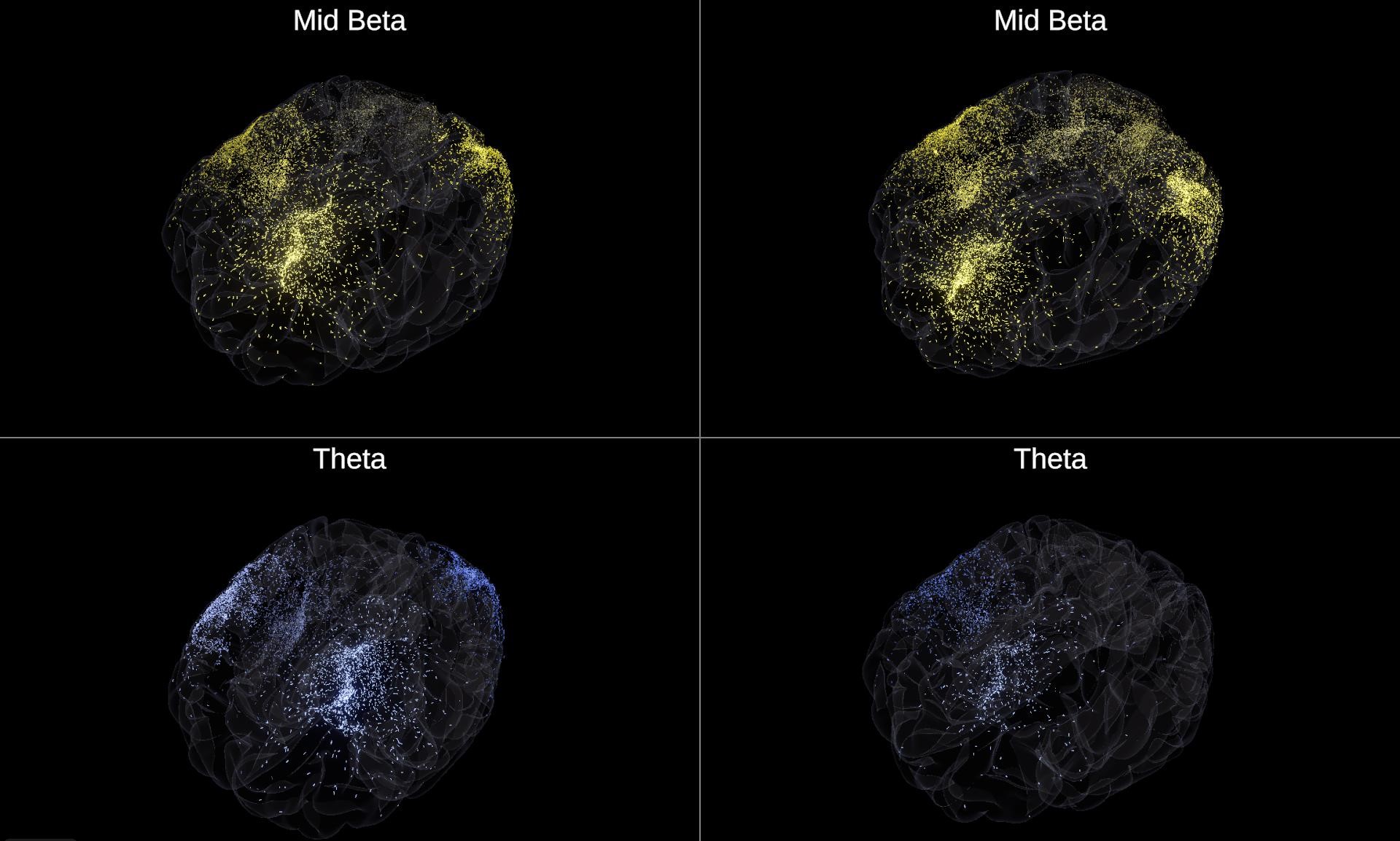
The most consistently researched brainwave signature in attention difficulties is an elevated Theta/Beta Ratio, often abbreviated as TBR. To understand what this means, it helps to know what each wave type reflects in the brain.
Theta reflects slow, drifting brain states: daydreaming, mind-wandering, drowsy thinking. In the right amounts, at the right times, theta is valuable. When it appears in excess in the frontal regions during tasks requiring sustained attention, it signals cortical underarousal. The brain simply isn't generating enough activation to stay engaged. This is not distraction as a choice. It is the brain failing to produce the arousal the task requires.
Beta reflects active, task-focused thinking. When beta is present in the right proportions, the brain is alert, processing efficiently, and on task. In a brain with an elevated Theta/Beta Ratio, beta production in the prefrontal regions is relatively suppressed. The focus signal is quiet when it needs to be loud. The result is a brain that exerts significant effort just to do what feels effortless for others.
The elevated Theta/Beta Ratio is the neurophysiological fingerprint of a brain working harder than it should have to just to stay switched on. It is not a character flaw. It is a measurable pattern, and patterns can be trained.
"An elevated Theta/Beta Ratio doesn't mean the brain can't focus. It means the brain has to work much harder than average to produce the arousal it needs to focus. That is an important distinction, and one that changes how we approach training."
The paradox of inconsistent focus
This brainwave picture helps explain something many people with attention difficulties experience as confusing and demoralising: the ability to focus intensely on certain things, usually high-stimulation or deeply engaging activities, while struggling enormously with others. This is not inconsistency or selective effort. The brain is seeking the level of arousal it needs to function. Highly stimulating activities, games, emergencies, deadlines, creative flow states, provide that arousal naturally. Routine or low-stimulation tasks do not provide enough, and the brain drifts.
For parents, this is an important distinction. When your child can spend two hours absorbed in a game but cannot sustain 20 minutes of homework, they are not being deliberately difficult. They are showing you the exact shape of their brain's arousal needs.
What else a full brain map reveals
Alongside the TBR, a full qEEG brain map often reveals other patterns relevant to attention. These vary between individuals, which is precisely why a map matters more than a generic protocol.
Excess alpha in frontal regions can reflect reduced executive function: the ability to plan, sequence tasks, and regulate behaviour intentionally. Reduced coherence between frontal areas may show up as difficulties with working memory, the ability to hold information in mind while using it. Elevated high-beta sometimes appears alongside or instead of excess theta, particularly in adults who experience both attention difficulties and anxiety. No two attention profiles are identical, and a training protocol built without a map is a best guess.
improved focus after training
brainwave pattern change
measured simultaneously
Why Hard Work Alone
Hasn't Been Enough
There is no shortage of advice on managing attention difficulties. Plan your day. Use a timer. Try meditation. Consider medication. Build better systems. Fix your sleep. Hire a tutor. Reduce screen time.
Some of this is genuinely useful, and several of these ideas form the foundation of what follows in this guide. But here is the honest reality: for people with an established Theta/Beta Ratio pattern, these approaches provide support at a level the problem doesn't live at. The reason is structural.
Behavioural strategies work at the surface. Planners, timers, and routines are scaffolding: they help the conscious mind compensate for an underlying attention regulation difficulty. The moment the external structure is removed, or life becomes too demanding for the system to hold, the pattern returns. You are not failing. You are maintaining something that requires constant effort to maintain.
General meditation and mindfulness can build attentional awareness over time. But for a brain with a genuinely elevated TBR, sitting still and attempting to focus quietly is often an exercise in frustration. The brain's arousal needs are not being met, and the experience of trying to meditate frequently confirms the belief that something is broken rather than building capacity.
Tutoring and academic support address outputs without touching the underlying processing pattern. A student can improve temporarily with enough external support, but nothing changes in how their brain manages sustained attention once the scaffolding is removed.
The frustration that many families and adults feel after years of trying is not because they haven't worked hard enough. It's because they have been working at the surface of a pattern that lives deeper. This is the gap that brain-map-guided neurofeedback is designed to address, not instead of these strategies, but alongside them, at the level they cannot reach.
Six Evidence-Based
Attention Tools
These are the same tools we teach clients to use between neurofeedback sessions. They work by addressing specific points in the attention-regulation chain: not just "trying harder to focus," but intervening at the physiological level where focus is generated or lost.
Use them as a daily practice. They will produce meaningful change within the 21-day protocol. What they will not do, on their own, is retrain the underlying Theta/Beta Ratio that is generating the difficulty. That distinction matters. By Day 21 you will have a clearer sense of how much of the work these tools can and cannot do for your particular pattern.
Cardiovascular movement rapidly increases dopamine and noradrenaline, the two neurotransmitters central to attention regulation. Even 20 minutes of moderately intense exercise before school or a work session measurably improves focus, reduces impulsivity, and increases time on task. The effect is direct and fast-acting: you are giving the brain the neurochemical boost it needs to produce the arousal that the Theta/Beta Ratio isn't generating on its own. This is among the most evidence-backed tools available for attention difficulties. It costs nothing and requires no equipment.
Many people with attention difficulties find it significantly easier to focus when another person is simply present in the room, even if that person is not helping or interacting with them. The social environment raises cortical arousal to a level that makes sustained focus more accessible. Study sessions alongside a friend, working in a cafe, or even a silent video call with someone else working quietly can all serve this function. It works because the brain's arousal needs are being partially met by the social context, reducing the gap the TBR creates.
A brain with a high Theta/Beta Ratio can often hold focused attention for 15 to 25 minutes far more reliably than for 60 or 90. Working in clearly bounded intervals with a genuine planned break between them uses this rhythm rather than fighting it. A deliberate 10-minute break after a focused interval is not a failure of concentration. It is a reset that allows the next interval to begin at full capacity. The key word is "planned." Knowing the end is defined reduces the background anxiety that drains attention during the interval itself.
Executive function is a limited resource that depletes across the day. Every decision made before getting to the work that actually matters draws on the same pool of cognitive resource. Preparing the environment the night before, laying out clothes, packing bags, planning tomorrow's priorities, setting up the workspace, reduces morning decision-making and leaves more capacity available for the tasks that genuinely require it. For a brain already working hard to produce focus, unnecessary early depletion is a compounding problem.
Theta activity increases naturally in drowsy states. Poor or inconsistent sleep is one of the fastest ways to worsen an already-elevated Theta/Beta Ratio. Consistent sleep and wake times, including on weekends, is one of the highest-leverage interventions for attention that requires no specialist input. Even 30 minutes of weekend sleep-schedule drift can shift Monday morning focus in a measurable way. If one change from this guide gets consistent priority, sleep timing is it.
Many people with attention difficulties find that moving from one task to the next is harder than either task itself. The brain resists the switch, and the transition period becomes a window where distraction takes hold. A brief, consistent ritual to mark the end of one task and the start of another, standing and stretching, walking to another room, getting a glass of water, doing three slow breaths, reduces this transition cost significantly. The physical act creates a neurological break between states, giving the brain a clear cue that the mode is changing.
These strategies are worth implementing consistently. What they cannot do is change the underlying Theta/Beta Ratio driving the difficulty. If you or your child has been using approaches like these for a while and the improvement feels partial or dependent on everything going right, that is not a failure. It is an honest signal that the work may need to go somewhere these strategies don't reach.
The NeuraLearn
21-Day Focus Protocol
This is a complete system, not a collection of tips. Follow it as written for 21 days. Track your morning variable daily. Re-take your assessment score on Day 21. Most people see a meaningful improvement in their total score with consistent practice. The gap between your Day 1 and Day 21 scores is important data: it tells you how much of the work the conscious tools can do, and where the deeper layer lies.
The three rules: Track every morning (60 seconds). Consistency beats intensity. Use the tools daily, not when you remember to.
If your Day 21 score is still 9 or above, or your child's is, the protocol has done what it can. The remaining pattern is running below the level these tools reach. That is not a failure. It is a clear signal that the work needs to go to the operating-system level.
What a Brain Map
Actually Shows
Lily came to NeuraLearn through her parents, who were looking for a research-backed way to support her focus and nurture her creative talents. She was bright, curious, and genuinely motivated. The problem was that her attention could not keep pace with her intentions. Before starting the program, Lily could not stay focused on a task for more than approximately 30 seconds before her mind pulled away.
This was not a lack of effort. The brain scan made clear what was happening beneath the surface.
By the end of her training block, Lily could focus on a task for approximately 40 minutes without becoming overly distracted. That is a shift from 30 seconds to 40 minutes, not through greater willpower, but because the brain pattern generating the difficulty had changed. Her cognitive assessments showed a 70% reduction in theta activity, a 290% increase in occipital beta, and meaningful improvements across working memory and sustained attention.
Not All Neurofeedback
Is Equal
There are neurofeedback providers across Australia, and quality varies significantly. Here is what sets NeuraLearn apart.
Without a qEEG, a provider is making educated guesses about your protocol. At NeuraLearn, the map is the foundation of everything. It shows exactly which patterns are present, where, and at what intensity. Training built from a map has a purpose.
Dr. Ardy holds a PhD in Neuroscience, lectures at university, and has specialised in EEG and HRV research throughout his career. The protocol you or your child receives is built from deep research knowledge, not a default template.
Whether the pattern is an elevated TBR, an alpha-dominant profile, excess high-beta, or a combination, the training is designed around what your brain actually shows. Two people with the same diagnosis often require different protocols entirely.
Every assessment produces a detailed written document explaining your brain pattern in plain language: what it shows, what it means for daily life and learning, and the personalised recommendations built from the findings.
"Dr. Ardy really helped to improve my 11-year-old son's focus. He is very knowledgeable and explained the neuroscience simply and in a very interesting way. We did training with Dr. Ardy for six weeks and I saw positive changes in behaviour. My son's teachers also mentioned he had significantly improved in focus at school."
Two Ways to Go
Deeper
If you have completed the 21-day protocol and still feel the pattern, or if your assessment score is in the 17 to 24 range, the next step is seeing what is actually happening on a brain map. Many clients and families begin with the Assessment before deciding whether to continue to training.
- Full qEEG brain mapping session (Sydney clinic)
- HRV assessment and nervous system analysis
- One-hour results review with Dr. Ardy
- Comprehensive Report, yours to keep
- Personalised protocol recommendations
Full cost deducted if you proceed to training
- Everything in the Brain Assessment
- Personalised training protocol built from your map
- Full neurofeedback training block, at the Sydney clinic
- Progress tracked and documented across the program
- Updated Comprehensive Report at completion
- Ongoing support and protocol adjustments
Sessions are calm, non-invasive, and comfortable. EEG sensors rest gently on the scalp with no discomfort. Children and adults alike typically find them manageable, and many describe the sessions themselves as genuinely relaxing.
What Would Your
Brain Map Show?
If any of this has resonated, or if your Day 21 score tells you something is still running underneath, the most useful next step is a conversation.
- What pattern your brain (or your child's brain) likely shows, based on what you're describing
- Whether neurofeedback is appropriate for your specific situation
- One thing you can adjust in the protocol this week based on your scores
- Whether early brain mapping would be valuable at your child's current stage of development
Not a sales call. If NeuraLearn isn't the right fit for your situation, Dr. Ardy will tell you that directly.